Showing of 1 until 15 from 170 result(s)
Search for: Trabeculectomy; Mitomycin; Choroid diseases; Ocular hypotension; Recurrence
Abstract
Objetivo: Avaliar o sucesso na redução da pressão intra-ocular, com a utilização de trabeculectomia simples e quando associada a 5-fluorouracil ou mitomicina-C e avaliar se o tempo de exposição à mitomicina-C modifica este índice de sucesso. Métodos: Analisaram-se retrospectivamente 171 olhos consecutivos, entre janeiro de 1989 e março de 1998, sendo 16 olhos submetidos à trabeculectomia simples, 38 olhos à trabeculectomia e aplicação pós-operatória de 5-fluorouracil e 117 olhos à trabeculectomia e aplicação intra-operatória de mitomicina-C. Resultados: Os resultados mostraram uma redução significativa da PIO (pressão intra-ocular), com o uso de antifibroblásticos (p < 0,05). O tempo de exposição à mitomicina-C não apresentou diferença estatisticamente significativa (p > 0,05). Conclusões: Os autores concluem que a trabeculectomia associada a drogas antifibroblásticas reduz a PIO de maneira significativa e promove estabilidade a curto prazo.
Keywords: Trabeculectomia; 5-Fluorouracil; Mitomicina C
Abstract
OBJETIVO: Investigar os efeitos da acomodação farmacológica e da cicloplegia nas medições oculares.
MÉTODOS: participaram do estudo 33 voluntários saudáveis (média de idade [± DP], 32,97 anos [± 5,21 anos]). Foram medidos o comprimento axial, a espessura macular e coroidal e o erro refrativo, bem como realizados exames de imagem da topografia corneana e do segmento anterior. Em seguida, foi induzida a acomodação farmacológica aplicando-se colírio de pilocarpina (cloridrato de pilocarpina a 2%) e as medições foram repetidas nos participantes. As mesmas medições foram repetidas depois de induzir a cicloplegia completa com colírio de ciclopentolato (cloridrato de ciclopentolato a 1%) e foram avaliadas as correlações entre as medidas.
RESULTADOS: Identificou-se aumento significativo da espessura coroidal subfoveal com o uso da pilocarpina a 2% (sem colírio, 319,36 ± 90,08 μm; com a instilação de pilocarpina, 341,60 ± 99,19 μm; com a instilação de ciclopentolato, 318,36 ± 103,0 μm; p<0,001). Detectou-se também aumento significativo do comprimento axial (sem colírio, 23,26 ± 0,83 mm; com a instilação de pilocarpina, 23,29 ± 0,84 mm; com a instilação de ciclopentolato, 23,27 ± 0,84 mm; p=0,003). Ao se comparar a acomodação farmacológica e a cicloplegia, houve diferença significativa na espessura macular central (com a instilação de pilocarpina, 262,27 ± 19,34 μm; com a instilação de ciclopentolato, 265,93 ± 17,91 μm; p=0,016). Observou-se que a miose associada à pilocarpina (p<0,001) e o desvio miópico (p<0,001) foram mais severos nos olhos azuis que nos castanhos.
CONCLUSÃO: A acomodação farmacológica pode alterar medidas oculares como a espessura da coroide e o comprimento axial. Essa possibilidade deve ser levada em consideração ao se efetuarem medições oculares, tais como cálculos de potência de lentes intraoculares.
Keywords: Paquimetria corneana; Coroide; Topografia da córnea; Comprimento axial do olho; Midriáticos/farmacologia; Pilocarpina/ farmacologia; Acomodação ocular

Abstract
OBJETIVO: Investigar a ação de colírios esteróides na doença de superfície ocular em pacientes a serem submetidos a cirurgia de trabeculectomia.
MÉTODOS: Foram incluídos 31 olhos de 31 pacientes com glaucoma em uso de pelo menos 3 medicações tópicas anti- hipertensivas há mais de 6 meses. Todos os pacientes foram tratados com colírio de etabonato de loteprednol 0,5% (1 gota a cada 6 horas) durante os 7 dias precedentes à cirurgia de trabeculectomia. Além disso, foram submetidos a exame oftalmológico completo e responderam questionário validado que visa avaliar parâmetros subjetivos correlacionados a doenças da superfície ocular (Ocular Surface Disease Index). Os aspectos clínicos avaliados foram: tempo de ruptura lacrimal, coloração da córnea após colírio de fluoresceína (ceratite) e hiperemia conjuntival. Os pacientes foram, ainda, submetidos à análise da superfície ocular através de novo
software tecnológico denominado “Keratographic”, tecnologia não invasiva que permite avaliar a doença da superfície ocular. A comparação da doença de superfície ocular antes e após a trabeculectomia foi avaliada estatisticamente através do teste pareado.
RESULTADOS: A média de idade dos participantes foi de 69,90 ± 10,77 anos. A AV média foi de 0,40 ± 0,34 logMAR. A taxa de prevalência global da Ocular Surface Disease Index foi de 27,20 ± 17,56 unidades. Em relação à avaliação clínica, não houve diferença significativa em relação hiperemia, ruptura lacrimal e ceratite antes e após a cirurgia (p>0,05 para todas as comparações). Em relação à análise com o “keratograph (menisco lacrimal, hiperemia, tempo de ruptura do filme lacrimal, meibografia para a pálpebra superior e inferior), os dois únicos parâmetros que diferiram significativamente antes e após a trabeculectomia, foram hiperemia e a média do tempo de rupture do filme lacrimal. Após a cirurgia de trabeculectomia, os pacientes apresentaram aumento da hiperemia conjuntival e diminuição do tempo de ruptura do filme lacrimal (p=0,013 e p=0,041, respectivamente).
CONCLUSÕES: O presente estudo, não somente confirma a elevada prevalência da doença de superfície ocular em pacientes com glaucoma, como também demonstra que a mesma pode ser mensurada objetivamente através de parâmetros mensurados pelo Keratograph. Apesar de ter utilizado etabonato de loteprednol 0,5% uma semana antes da cirurgia, nossa amostra apresentou piora da hiperemia conjuntival e diminuição no tempo de ruptura do filme lacrimal no pós-operatório.
Keywords: Glaucoma; Soluções oftálmicas; Doença de superfície ocular; Trabeculectomia
Abstract
Objetivo: Utilizar aprendizado de máquina para predizer o risco de picos de pressão intraocular às 6 AM em pacientes com glaucoma primário de ângulo aberto e suspeitos.
Métodos: Esse estudo observacional transversal incluiu 98 olhos de 98 pacientes submetidos à curva de 24 horas de pressão intraocular (incluindo as medidas às 6 AM). A curva diurna de pressão intraocular foi definida como uma série de três medidas da curva de 24 horas de pressão intraocular às 8 AM, às 9 AM e às 11 AM. Duas novas variáveis foram apresentadas: inclinação e concavidade. A inclinação da curva às 8 AM foi calculada como a diferença entre pressão intraocular às 9 AM e 8 AM e reflete a variação da pressão intraocular na primeira hora. A concavidade da curva foi calculada como a diferença entre as inclinações às 9 AM e às 8 AM e pode ser para cima ou para baixo. Uma árvore de classificação foi usada para determinar um algoritmo multivariado a partir das medidas da curva diurna para prever o risco de pressão intraocular elevada às 6 AM.
Resultados: Quarenta e nove (50%) olhos apresentaram pressão intraocular às 6 AM >21 mmHg e a mediana do pico de pressão intraocularPIO foi 26 mmHg. Os melhores preditores de pressão intraocular às 6 AM >21 mmHg foram a pressão intraocular às 8 AM e a concavidade. O modelo proposto apresentou uma sensibilidade de 100% e uma especificidade de 86%, com uma acurácia de 93%.
Conclusões: A abordagem de aprendizado de máquina foi capaz de prever o risco de picos de pressão intraocular às 6 AM com uma boa acurácia. Essa nova abordagem para a curva diurna de pressão intraocular pode se tornar uma ferramenta amplamente utilizada na prática clínica e a indicação da curva de 24 horas de pressão intraocular pode ser racionalizada de acordo com a estratificação de risco.
Keywords: Glaucoma; Glaucoma de ângulo aberto; Suspeita de glaucoma; Pressão intraocular; Aprendizado de máquina
Abstract
PURPOSE: This study was conducted to report the histopathological and clinical features of the Marcus Gunn phenomenon and other similar conditions of upper eyelid misfiring.
METHODS: This was a retrospective study of patients with congenital ptosis with Marcus Gunn phenomenon who have undergone surgical repair over a period of 12 years and another two patients with upper eyelid misfiring in association with extraocular movements to identify their histopathological findings as subtypes representing ocular congenital cranial dysinnervation disorder.
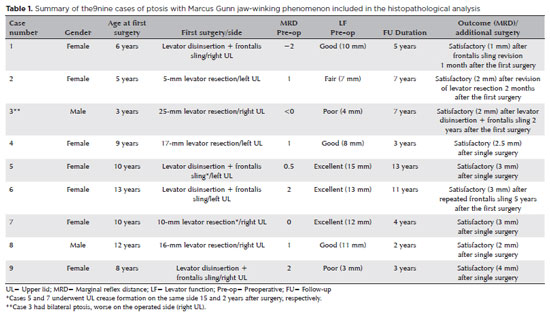
RESULTS: Among 136 patients with congenital ptosis, 11 (8%) patients with Marcus Gunn phenomenon or misfiring were identified, of whom 9 (6.6%) had typical known Marcus Gunn phenomenon and 2 (1.4%) had eyelid misfiring similar to Marcus Gunn phenomenon. In all patients, the histopathological changes of the excised levator muscle included overall loss and/or atrophy of muscle fibers and irregular-modified Gomori trichrome staining.
CONCLUSION: The Marcus Gunn phenomenon and similar misfiring conditions with synkinetic extraocular muscle movements share findings that are consistent with the neurogenic type of muscle atrophy. This result suggests a common underlying etiology with variable clinical findings, representing the ocular counterpart of congenital cranial dysinnervation disorder, which has been reported as ocular congenital cranial dysinnervation disorder.
Keywords: Eyelid diseases; Ocular motility disorders/surgery; Ophthalmologic surgical procedures
Abstract
PURPOSE: This study investigated the relationship between blood pressure and intraocular pressure in treatment-naive, non-glaucoma patients with different blood pressure statuses, focusing on the 24-h ocular volume and nocturnal blood pressure decline.
METHODS: Treatment-naive, non-glaucoma patients undergoing hypertension evaluation were enrolled as study participants. Simultaneous 24-h ambulatory blood pressure measurement and 24-h ocular volume recording with a contact lens sensor. We also compared ocular volume curve parameters between normotensive and hypertensive patients, as well as between those with and without nocturnal blood pressure decline.
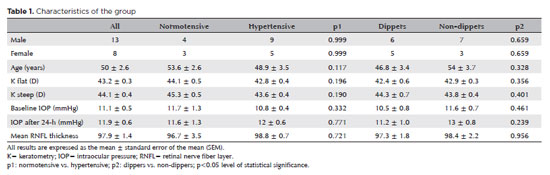
RESULTS: A total of 21 patients, including 7 normotensive and 14 treatment-naive hypertensive individuals, were included in the study. of them, 11 were dippers and 10 were non-dippers. No significant difference in the 24-h ocular volume slope was observed between the hypertensive and normotensive patients (p=0.284). However, dippers had a significantly higher 24-h ocular volume slope (p=0.004) and nocturnal contact lens sensor output (p=0.041) than non-dippers.
CONCLUSION: Nocturnal blood pressure decline, rather than the blood pressure level, is associated with the increased 24-h ocular volume slope and nocturnal ocular volume. Further studies are required to determine whether the acceleration of glaucoma progression in dippers is primarily due to low blood pressure, high intraocular pressure, or a combination of both.
Keywords: Intraocular pressure; Blood pressure; Contact lens; Glaucoma; Hypertension; Hypotension
Abstract
PURPOSE: This study aimed to report the surgical outcomes and success predictors of micropulse transscleral cyclophotocoagulation in eyes with refractory glaucoma.
METHODS: This was a noncomparative, interventional case series. Patients with refractory glaucomas, defined as eyes with prior incisional glaucoma surgery failure and uncontrolled intraocular pressure, who underwent micropulse transscleral cyclophotocoagulation between March 2017 and June 2021 were enrolled. A minimum follow-up period of 6 months was required. Preoperative and postoperative intraocular pressure, number of hypotensive medications, surgical complications, and any subsequent related events were recorded. Success criteria were as follows: 1) intraocular pressure reduction ≥20% and intraocular pressure ≤18 mmHg; 2) intraocular pressure reduction ≥30% and intraocular pressure ≤15 mmHg. The need for topical hypotensive medications was not considered a failure.
RESULTS: Seventy-nine (79) eyes (79 patients; mean age, 57.5 ± 20.6 years) were included. Overall, the median follow-up duration was 12.0 (interquartile interval, 6–24) months, and the mean intraocular pressure was reduced from 22.8 ± 6.8 mmHg to 15.5 ± 5.6 mmHg at the last follow-up visit (p<0.001). The mean number of medications was reduced from 2.8 ± 0.7 to 2.0 ± 1.0 (p<0.01). At 12 months postoperatively, the success rates for criteria 1 and 2 were 54.9% and 49.7%, respectively. Aside from one case of corneal ulcer, which fully resolved with clinical treatment, and two cases of persistent hypotony (with no visual acuity loss during follow-up), no other vision-threatening complications were observed during the postoperative period. The magnitude of intraocular pressure reduction at 1 month (adjusted to preoperative intraocular pressure; HR=1.01; p=0.002).
CONCLUSION: Our findings suggest that micropulse transscleral cyclophotocoagulation is a relatively effective alternative for managing refractory glaucomas, with minor postoperative complications. In addition, the initial intraocular pressure reduction was a statistically significant predictor of 1-year success in patients undergoing micropulse transscleral cyclophotocoagulation.
Keywords: Intraocular pressure/physiology; Glaucoma, open-angle/surgery; Trabeculectomy; Laser coagulation/methods; Tonometry, ocular/methods; Postoperative complications; Antihypertensive agents/therapeutic use.
Abstract
PURPOSE: Using advanced imaging techniques, this study aimed to evaluate corneal stability, epithelial remodeling, and tear film changes over a one-year period in first-time soft-contact lens wearers.
METHODS: A retrospective study was conducted on 100 eyes of 50 first-time daily soft-contact lens users aged 21–65 years with no prior rigid gas-permeable lens wear. The Sirius Scheimpflug imaging system was used to assess corneal topography, epithelial thickness, and non-invasive tear break-up time at baseline, 3, 6, and 12 months. Corneal warpage was evaluated using symmetry indices and Baiocchi Calossi Versaci indices. We performed statistical analysis using repeated-measures analyses of variance with Greenhouse-Geisser correction.
RESULTS: The mean baseline central corneal thickness was 537.83 (±7.92) µm, with no significant thinning after one year. The average simulated keratometry values remained stable, indicating no progressive corneal steepening or flattening. There were no significant changes in warpage indices over time, suggesting corneal shape preservation. Higher-order aberrations (coma, trefoil, and spherical aberrations) and non-invasive tear break-up time remained unchanged throughout the study period.
CONCLUSIONS: Modern silicone hydrogel soft-contact lenses do not induce significant corneal warpage, epithelial remodeling, or optical aberrations over a one-year period. We found that corneal morphology and tear film stability were preserved, supporting the safety of soft-contact lens use. These findings provide clinically relevant insights into the long-term impact of contact lens wear. They may facilitate improved lens fitting strategies and preoperative refractive surgery assessments.
Keywords: Contact lenses, hydrophilic; Cornea/surgery; Corneal diseases; Corneal topography; Adaptation, ocular/physiology; Endothelium, corneal/pathology; Refractive errors; Tears/metabolism.
Abstract
PURPOSE: To evaluate the predictive value of initial intraocular pressure difference of the detached and fellow eyes of patients with complex rhegmatogenous retinal detachment on postoperative persistent ocular hypotony.
METHODS: This retrospective observational study included 538 eyes of 538 unilateral complex rhegmatogenous retinal detachment patients with a proliferative vitreoretinopathy grade of C-1 or higher, treated with silicone oil endotamponade following pars plana vitrectomy. The patients were divided into Group A (patients having silicone oil removal without ocular hypotony; n=504) and Group B (patients with persistent ocular hypotony following silicone oil removal [n=8, 23.5%] and with retained silicone oil [n=26, 76.5%] due to the risk of persistent ocular hypotony; total n=34). Ocular hypotony was defined as an intraocular pressure of <6 mmHg on two or more occasions. Patients' demographics, including age, sex, and follow-up time, and ocular characteristics, including ocular surgical and trauma history, initial and final best-corrected visual acuity, intraocular pressure and initial intraocular pressure difference of the detached and fellow eyes, and anatomical success rates and postoperative complications, were retrospectively collected from the electronic patient files.
RESULTS: The initial intraocular pressure was significantly lower in the detached eyes of Group B than in Group A (8.3 ± 3.5 vs. 12.9 ± 3.3, p<0.001). Also, the initial intraocular pressure difference was significantly higher in Group B than in Group A (8.9 ± 3.2 vs. 2.2 ± 2.7mmHg, p<0.001). The receiver operating characteristic curve analysis showed that the cutoff value of the initial intraocular pressure difference was 7.5mmHg for the risk of persistent ocular hypotony. The most influential factors on postoperative persistent ocular hypotony in the binary logistic regression analysis were the initial intraocular pressure difference and the need for a retinectomy.
CONCLUSION: In eyes with complex rhegmatogenous retinal detachment treated with pars plana vitrectomy and silicone oil tamponade, the initial intraocular pressure difference could be of value in predicting postoperative persistent ocular hypotony and could guide surgeons on the decision of silicone oil removal.
Keywords: Hypotony; Intraocular pressure; Pars plana vitrectomy; Retinal detachment; Silicone oils; Ocular hypotension; Visual acuity
Abstract
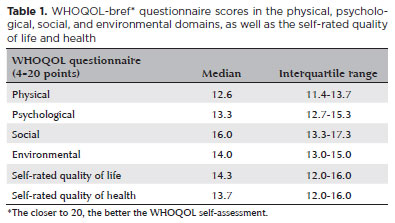
PURPOSE: To describe the ophthalmological findings of dry eye disease and its relation to the quality of life of COVID-19 survivors.
METHODS: COVID-19 survivors who had previously been hospitalized at Hospital das Clínicas de Ribeirão Preto complex underwent an ophthalmological evaluation, which included a dry eye disease questionnaire, break-up time, fluorescein staining, and Schirmer test. We collected the presenting and best-corrected visual acuity, sociodemographic data, personal medical history, and scores from a self-reported quality of life questionnaire (WHOQOL-bref). According to the severity of the acute phase of the disease, the patients were classified into mild-to-moderate, severe, and critical groups.
RESULTS: Ninety-five patients (190 eyes) were evaluated 100 ± 44 days after the onset of COVID-19 symptoms. Of these, 83 patients (87.3%) completed the WHOQOL-bref questionnaire. Ten patients (12.0%) had mild-to-moderate COVID-19, 41 (49.4%) had severe COVID-19, and 32 (38.6%) had critical COVID-19. The median best-corrected visual acuity was logMAR 0 (0-1). Approximately 26.3% patients had a history of dry eye disease or severe dry eye symptoms (frequent or constant ocular dryness and irritation). There was an association between the proportion of patients with dry eye disease and the quality of life (p=0.014) and health (p=0.001). Furthermore, there was a significant trend between the proportion of patients with dry eye disease and how they rated their health and quality of life (p=0.0004 and 0.0027, respectively.
CONCLUSIONS: There is a significant negative correlation between the proportion of patients with dry eye disease and their self-reported quality of life.
Keywords: COVID-19; Coronavirus infections; SARS-CoV-2; Eye diseases; Epidemiology; Ocular surface; Public health
Abstract
Reportamos o caso de homem previamente hígido, 48 anos, com paralisia isolada do nervo abducente 18 dias após infecção pelo novo coronavírus (COVID-19) confirmada por reação cadeia polimerase de transcriptase reversa. A principal queixa do paciente na admissão era diplopia. O exame ocular revelou paralisia do sexto nervo craniano do olho esquerdo. Esotropia incomitante no exame inicial media 30 dioptrias prismáticas. Abdução estava limitada com adução completa no olho esquerdo. O paciente foi submetido a investigação clínica e neurológica com exame de neuroimagem, incluindo análise de amostra do líquido cefalorraquidiano para descartar causas infecciosas. Optou-se por abordagem conservadora com terapia ortóptica e prisma de Fresnel. Oito meses após a infecção pelo COVID-19, o paciente evoluiu com regressão do estrabismo e informou recuperação completa do quadro. Este relato sugere que paralisia isolada do nervo abducente causada por SARS-CoV-2 pode melhorar com abordagem conservadora.
Keywords: Infecções por coronavirus; Doenças do nervo abducente; Estrabismo; Vírus da SARS; Transtornos da motilidade ocular; Humanos; Relatos de casos
Abstract
A patient presented with corneoscleral thinning five months after the treatment of suspected ocular squamous surface neoplasia with mitomycin-C and interferon. For tectonic and aesthetic purposes, we decided to perform lamellar corneoscleral transplantation. The approach used established new tectonic support and corneal homeostasis. This technique might be an option in similar cases.
Keywords: Corneal diseases/diagnosis; Carcinoma, squamous cell; Conjunctival neoplasms/surgery; Interferon-alpha/therapeutic use; Mitomycin/therapeutic use; Ophthalmic solutions/administration & dosage; Humans; Case reports
Abstract
Relatamos um caso de despigmentação aguda bilateral da íris, no qual obtivemos adequado controle da pressão intraocular com o implante do iStent®, após resolução da fase aguda da doença. Paciente feminina, 62 anos, atendida com quadro agudo, bilateral e simultâneo de dor ocular, fotofobia, hipertensão ocular (34 mmHg), pigmentos circulantes na câmara anterior, áreas de despigmentação iriana e sinéquias posteriores. Havia recebido amoxicilina-clavulanato e moxifloxacina orais para pneumonia 2 meses antes. Suspeitando-se de despigmentação aguda bilateral da íris ou de etiologia viral, recebeu acetazolamida, aciclovir e prednisona orais, e colírios prednisolona, betaxolol, brimonidina, dorzolamida e atropina. O quadro se resolveu gradualmente em 4 meses, porém, após 1 ano, desenvolveu catarata bilateral e ainda usava 3 colírios hipotensores (pressão intraocular 16/18 mmHg). A cirurgia combinada de catarata-iStent® foi realizada em ambos os olhos. Um ano depois, a pressão intraocular mantinha-se 11/12 mmHg, sem medicação. O iStent® foi seguro e eficaz no controle deste glaucoma secundário.
Keywords: Doenças da íris; Catarata; Hipertensão ocular; Stents; Gonioscopia
Abstract
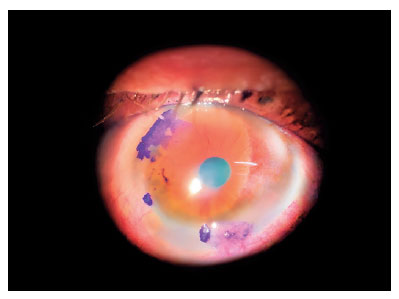
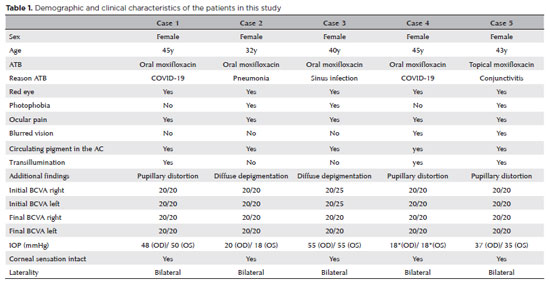
Bilateral acute depigmentation of the iris and bilateral acute iris transillumination (BAIT) are similar clinical entities. The former causes acute-onset depigmentation of the iris stroma without transillumination, whereas the latter causes depigmentation of the iris pigment epithelium with transillumination. The etiopathogenesis of these conditions is not yet fully understood, but the proposed causes include the use of systemic antibiotics (especially moxifloxacin) and viral triggers. We present a case series of five female patients with a mean age of 41 (32-45) years, all of whom suffered acute onset of bilateral pain and redness of the eyes after moxifloxacin use (oral or topical). It is important for ophthalmologists to be aware of the two forms of iris depigmentation since this case series suggests that SARS-CoV-2 or its empirical treatment with moxifloxacin may trigger iris depigmentation. If this is the case, clinicians will likely see increased incidences of bilateral acute depigmentation of the iris and bilateral acute iris transillumination during and after the COVID-19 pandemic.
Keywords: SARS-CoV-2; Pigment epithelium of eye; Iris diseases/pathology; Transillumination; Ocular hypertension; Intraocular pressure; Drug related side effect and adverse reactions; Iris diseases/drug therapy; Moxifloxacin/therapeutic Use; Humans; Case reports
Abstract
Paciente do sexo feminino, 42 anos, com perda visual e epífora crônica no olho esquerdo. Sua acuidade visual melhor corrigida foi de 10/10 no olho direito e 0,3/10 no olho esquerdo. O exame do segmento anterior foi normal. No exame de fundo de olho, foram detectadas pregas coroidais. A tomografia de coerência óptica revelou elevação na mácula e pregas coroidais. A ultrassonografia revelou sinal T. A imagem de ressonância magnética mostrou mucocele etmoidal que comprime os tecidos orbitários. O Departamento de Otorrinolaringologia realizou o tratamento cirúrgico. No pós-operatório, as dobras coroidais se recuperaram, a acuidade visual melhor corrigida foi melhorada, mas ocorreu líquido sub-retiniano. Durante o período de acompanhamento sem qualquer tratamento, o líquido sub-retiniano recuperou-se totalmente.
Keywords: Maculopatia; Tomografia de coerência óptica; Doenças da coroide; Mucocele
ABO is licensed under a Creative Commons Attribution-NonComercial 4.0 Internacional.

About
Issues
Editorial Board
Submission
Official publication of Conselho Brasileiro de Oftalmologia
Rua Casa do Ator, 1.117 - 2º andar - CEP: 04546-004
São Paulo - SP, Brazil
Phone: +55 11 3266-4000