
Arq. Bras. Oftalmol. 2026; 89 (4): 10.5935/0004-2749.2025-0034
Total: 827
Isadora C. José1; Ana Paula M. T. Oguido1; Sergio M. Borghi2; Silvio César S. G. Filho2; Claudia R. Morgado3; Rodolfo C. Feijó1; Beatriz I. dos Santos1; Beatriz Karine Taba Oguido4; Pedro Henrique R. Cerqueira5; Antônio Marcelo B. Casella1
DOI: 10.5935/0004-2749.2025-0034
ABSTRACT
PURPOSE: To evaluate the impact of the COVID-19 pandemic and characterize the serological profile of discarded corneal donations in the coverage area of the Banco de Olhos de Londrina, through reverse transcription-polymerase chain reaction testing for COVID-19 and serological screening of cornea donors excluded because of positive test results.
METHODS: This observational retrospective study included 776 cornea donors who’s serological and reverse transcription-polymerase chain reaction test results were processed at the Hospital of Universidade Estadual de Londrina between May 2020 and 2022. The number of corneal donations and tissue utilization rates throughout the years of operation of the Banco de Olhos de Londrina were also analyzed.
RESULTS: The mean donor age was 53.14 years; 332 donors (43%) were female, and 444 (57%) were male. Positive results were identified in 15.76% of donors for hepatitis B core antibody antibodies, 0.65% for hepatitis B surface antigen, 1.03% for hepatitis C antibodies, and 0.52% for human immunodeficiency virus and human T-lymphotropic vírus. Positive reverse transcription-polymerase chain reaction results for SARS-CoV-2 were observed in 2.7% of cases. Older adults were 2.6 times more likely to test positive for SARS-CoV-2 (95% CI, 1.06-6.34) and 3.0 times more likely to test positive for hepatitis B core antibody (95% CI, 1.95-4.41) than younger individuals. A 75.2% reduction in corneal donations was observed in 2020 compared with 2019, accompanied by a 5% increase in tissue utilization, possibly associated with the effectiveness of donor screening during the pandemic.
CONCLUSION: The COVID-19 pandemic had a profound impact on the number of corneal transplants worldwide, in Brazil, and at the Banco de Olhos de Londrina because of the substantial decline in donations during this period. Hepatitis B was the leading cause of corneal tissue discard due to positive serology in both this study and previous reports, highlighting the importance of prevention programs and improved vaccination coverage. Strict legislation, comprehensive serological screening, and appropriate processing of donated tissue remain essential to eliminate potential sources of infection and ensure transplantation safety.
Keywords: Cornea; Corneal transplantation; COVID-19; Eye banks; Serology
INTRODUCTION
On February 4, 1997, the Brazilian Federal Government enacted Law No. 9.434, which regulates the removal of organs, tissues, and body parts for transplantation and therapeutic purposes, thereby establishing the National Transplant System. Corneal transplantation is the most commonly performed type of transplant worldwide. Owing to the avascular nature of the cornea, this procedure benefits from immune privilege, resulting in relatively low rejection rates. Corneal transplantation plays a critical role in restoring vision in several ocular diseases and depends on the proper donation, processing, and distribution of corneal tissue. Viability assessment of donated tissue includes testing for hepatitis B (HBsAg and anti-HBc), hepatitis C (anti-HCV), HIV (anti-HIV-1 and anti-HIV-2), and human T-cell lymphotropic virus (anti-HTLV-I and anti-HTLV-II). In 2020, following the onset of the COVID-19 pandemic in Brazil, RT-PCR testing for SARS-CoV-2 became mandatory for potential cornea donors, directly affecting the number of available donations.
The potential transmission of infectious diseases through organ and tissue transplantation is well established(1). Even avascular tissues such as the cornea may serve as vectors for contamination and pathogen transmission(1,2). At the beginning of 2020, the presence of SARS-CoV-2 in corneal tissue remained uncertain. Several studies demonstrated the presence of the virus in the conjunctiva, aqueous humor, and vitreous body(3,4). Furthermore, SARS-CoV-2 infects human cells primarily through interaction between its surface protein and the host angiotensin-converting enzyme 2 (ACE2) receptor, a process mediated by the host transmembrane protease serine 2 (TMPRSS2). Both ACE2 and TMPRSS2 are expressed in corneal tissue, suggesting that the cornea may represent a potential source of infection(2,5). Studies involving conjunctival and nasopharyngeal swab collection from patients with COVID-19 also indicated that ocular infection in potential donors could not be excluded(6).
In response to these concerns, and in addition to the previously established medical and social history assessment of donors (Notification of Potential Donor), potential donors in the state of Paraná underwent complementary evaluation in accordance with Technical Notes No. 80/2020-SNT/MS (September 17, 2020) and No. 60/2020/GSTCO/Anvisa (August 31, 2020; Supplementary File 1).
The present study aimed to characterize the viral infectious profile of cornea donors from the Londrina Eye Bank between March 2020 and 2022 and to evaluate the impact of the COVID-19 pandemic on corneal transplantation during this period.
METHODS
A retrospective descriptive study was conducted through the analysis of 776 medical records of cornea donors followed by the Eye Bank of the Hospital Universitário of Universidade Estadual de Londrina (HU-UEL). All records were reviewed by an ophthalmologist specialized in corneal transplantation. Donors underwent RT-PCR testing for SARS-CoV-2, in addition to serological screening for hepatitis B (HBsAg and anti-HBc), hepatitis C (anti-HCV), HIV (anti-HIV 1 and 2), and human T-cell lymphotropic virus (anti-HTLV I and II) between May 2020 and 2022.
Statistical reports from Banco de Olhos de Londrina, data from the Brazilian National Health Surveillance Agency (ANVISA), and epidemiological reports on COVID-19 from the Government of the State of Paraná were also reviewed. The study was approved by the Human Research Ethics Committee of Universidade Estadual de Londrina on September 1, 2021 (Approval No. 4.948.104) and was conducted in accordance with Resolution No. 466/12 of the National Health Council and its supplementary regulations.
Cornea donor selection followed predefined inclusion and exclusion criteria established by resolutions of the Collegiate Board of ANVISA. According to these regulations, the initial donor risk assessment consisted of a physical examination and interviews with family members. To determine tissue eligibility for transplantation, laboratory testing was performed to exclude infections caused by HIV (anti-HIV 1 and 2), hepatitis B (HBsAg and anti-HBc), hepatitis C (anti-HCV), and HTLV (anti-HTLV I and II).
Following the onset of the COVID-19 pandemic in 2020, a supplementary questionnaire (Supplementary File 1) was incorporated into donor screening protocols in the state of Paraná. Potential donors with confirmed SARS-CoV-2 infection, defined by positive nasopharyngeal RT-PCR results as well as individuals with suspected infection or documented contact with suspected cases were excluded. According to the Centers for Disease Control and Prevention (CDC), close contact was defined as being within 2 m of an infected individual for at least 15 min during the 2 days before symptom onset or, in asymptomatic cases, during the 2 days before sample collection.
Donors were categorized into two age groups: younger individuals (≤60 years) and older adults (>60 years). Contingency tables were constructed, and chi-square tests were performed to assess associations between serological results and sex as well as between serological results and age group. Odds ratios (ORs) were subsequently calculated for each serological marker to identify potential differences between groups. A significance level of α=0.05 was adopted for all analyses. Statistical analyses were performed using R software.
For OR calculations, female sex and older adults were used as the reference categories.
RESULTS
During the period from March 2020 to 2022, a total of 776 cornea donors were registered. The mean age was 53.14 years. Of these donors, 332 were female, and 444 were male, representing 43% and 57% of the total sample, respectively.
Data obtained from reports by the Government of the State of Paraná estimated 7,927 deaths from SARS-CoV-2 during this period in the studied region. These patients were not approached because of the epidemiological context of COVID-19.
Analysis of serological frequencies (Tables 1 and 2) showed that 122 donors (15.76%) tested positive for anti-HBc antibodies (hepatitis B), five (0.65%) tested positive for HBsAg (hepatitis B), and eight (1.03%) tested positive for hepatitis C (anti-HCV antibodies). In addition, four donors (0.52%) tested positive for HIV and HTLV. Positive RT-PCR results for SARS-CoV-2 were detected in 21 cornea donors (2.7%).


As shown in table 3, only the hepatitis B serological test (anti-HBc) was significantly associated with sex, with a p value of 0.030 and an odds ratio of 0.63, indicating that males were approximately 59% more likely to test positive than females. No statistically significant differences were observed between sexes for COVID-19, HBsAg, anti-HCV, HIV 1 and 2, or HTLV I and II serologies.
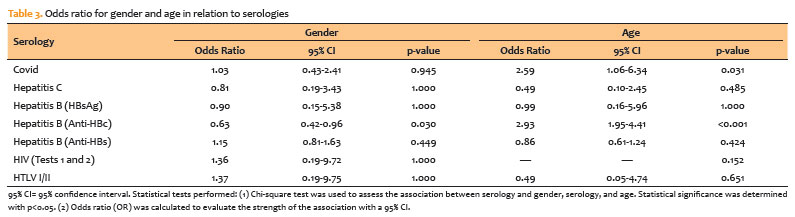
Table 3 also shows that COVID-19 and hepatitis B (anti-HBc) were significantly associated with age, with p values of 0.031 and <0.001, respectively. Elderly individuals (>60 years) were 2.6 times more likely to test positive for COVID-19 than younger individuals (95% CI, 1.06-6.34). For hepatitis B (anti-HBc), elderly individuals were approximately three times more likely to test positive (95% CI, 1.95-4.41). No statistically significant differences between age groups were observed for HBsAg, anti-HCV, HIV 1 and 2, or HTLV I and II serologies.
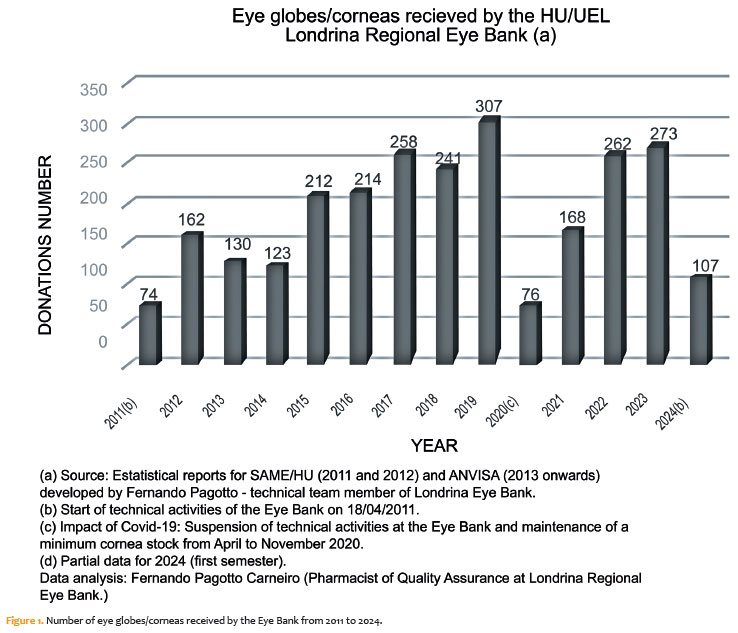
Regarding the total number of cornea donations received by the Banco de Olhos de Londrina over the years, 74 donations were registered in 2011, when the bank began technical activities on April 18, followed by 162 in 2012, 130 in 2013, 123 in 2014, 212 in 2015, 214 in 2016, 258 in 2017, 241 in 2018, and 307 in 2019. A marked reduction was observed in 2020, with only 76 donations, followed by 168 in 2021, 262 in 2022, 273 in 2023, and 107 donations in the first half of 2024 (Figure 1).
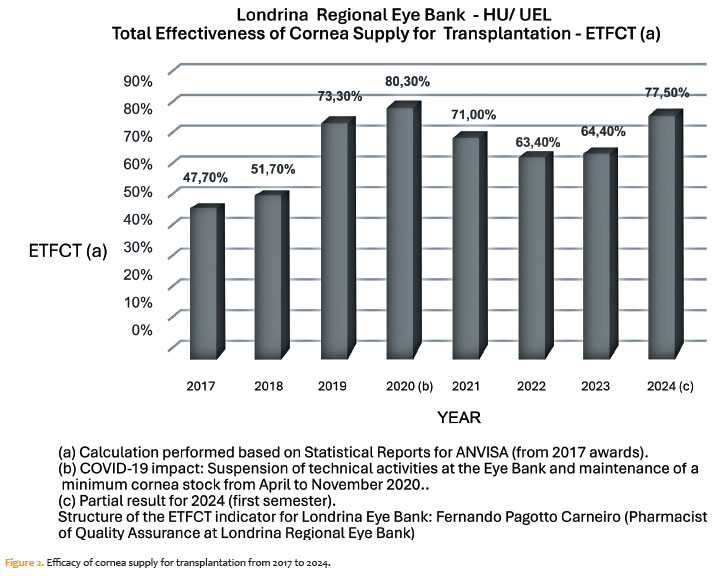
Analysis of tissue utilization rates, corresponding to donated tissues that were not discarded, demonstrated high rates during the COVID-19 pandemic. Tissue utilization rates were 47.7% in 2017, 51.7% in 2018, 75.3% in 2019, and increased to 80.3% in 2020, followed by 71% in 2021, 63.4% in 2022, and 64.4% in 2023. These findings may be associated with the effectiveness of donor screening during the pandemic period (Figure 2).
DISCUSSION
With the onset of the COVID-19 pandemic, the Ministry of Health restricted cornea donations, limiting them exclusively to cases of brain death and excluding those resulting from cardiorespiratory arrest for nearly 6 months(7). This measure led to a significant reduction in the number of donations.
It is known that discards due to positive serology represent one of the main causes of cornea discard in Brazil(8). A study involving 37 Eye Banks in Brazil demonstrated an 85% reduction in corneal tissue donations from the first to the third quarter of 2020(7). According to data from the National Transplant System, which includes all Eye Banks in the country, the reduction was 87.6%. When the donations from the Banco de Olhos de Londrina were analyzed separately, a reduction of 86.11% was observed during the same period.
The total number of donations at the Banco de Olhos de Londrina decreased from 307 in 2019 to 76 in 2020, representing a 75.2% reduction in donations during the first year of the pandemic (Figure 1). In contrast, there was a 5% increase in the utilization of donated tissue during the same period (Figure 2). The pre-established criteria for cornea discard, as defined by law, remained unchanged. Therefore, improved selection of brain-dead donors during the interview process using the new questionnaire may have contributed to the increased utilization of donated tissues.
Chaurasia et al.(9) conducted a study evaluating the prevalence of SARS-CoV-2 in 200 ocular tissues, including corneas and conjunctiva, from 100 asymptomatic donors between September 2020 and April 2021. Positive RT-PCR results were found in 1% of the tissues, all from conjunctival tissue, whereas no corneal tissues tested positive. Given the low positivity rate, the authors questioned the necessity of postmortem RT-PCR testing for SARS-CoV-2 in potential donors.
Alves et al.(10) evaluated the main causes of cornea discard at the Paraíba Eye Bank from 2013 to 2022 and reported a SARS-CoV-2 positivity rate of 0.38% among eligible corneas. In Brazil, studies evaluating the prevalence of SARS-CoV-2 in potential cornea donors are still scarce. In our study, RT-PCR positivity for SARS-CoV-2 was observed in 2.7% of donors between 2020 and 2022; however, no investigation of viral presence in ocular tissue was performed. A study conducted in Mexico reported the discard of 3.8% of donors because of positive serology for SARS-CoV-2(10).
In the literature, there are no reports of HIV, HTLV, or hepatitis C transmission through cornea transplantation(11); however, these conditions remain absolute contraindications to ensure the safety and quality of the transplantation process. Likewise, there is currently no confirmed evidence of COVID-19 transmission through cornea transplantation, and positive RT-PCR results from nasal swabs do not necessarily indicate the presence of the virus in corneal tissue. Nevertheless, the possibility of SARS-CoV-2 transmission through this tissue cannot yet be excluded. Therefore, our institution maintains the exclusion of potential donors positive for SARS-CoV-2 to minimize transmission risk and ensure transplant safety.
The literature has discussed the possible future relaxation of this exclusion criterion to improve access to corneal transplantation(12,13). There has been increasing use of kidneys, hearts, and livers from donors who tested positive for SARS-CoV-2 at the time of donation, without evidence of transmission(14-17). To date, confirmed donor-derived infections in solid organ transplantation have mainly involved lung donors(18).
A review of serological profiles from different Brazilian Eye Banks demonstrated variation in cornea discard rates due to positive serology. Santos et al.(19), analyzing 216 post-preservation corneas intended for optical transplantation, found a discard rate of 1.85% due to hepatitis B serology as the main cause, in addition to two inconclusive hepatitis B results. This was followed by 0.93% positivity for HTLV I and II and 0.93% inconclusive results for HIV. No positive serology for hepatitis C was reported. Viegas et al. observed at the Banco de Olhos do Hospital São Paulo that 10.4% of corneas were positive for hepatitis B and 19.8% were inconclusive; for hepatitis C, 2.9% were positive and 16.9% inconclusive; and for HIV, 1.0% were positive and 17.7% inconclusive. Shiratori et al.(20), at the Banco de Olhos de Cascavel, reported 47.4% positivity for anti-HBc antibodies, 1.5% for HBsAg, and <1% for hepatitis C, while 48.2% of donors had negative serologies and no positive HIV I and II results (21). Lunardelli et al.(22) found a 23% cornea discard rate due to serological inadequacy at Santa Casa de Porto Alegre, with anti-HBc as the most prevalent marker, followed by anti-HCV and HIV markers. In Minas Gerais, the discard rate due to positive serology in 2007 was 46%(23).
A previous study conducted at Banco de Olhos de Londrina from January 2014 to December 2018 by Morgado et al.(24) identified positivity rates of 36.67% for hepatitis B, 1.11% for hepatitis C, and 0.89% for HIV.
In our study, positivity rates were 16.41% for hepatitis B, 1.03% for hepatitis C, and 0.52% for HIV and HTLV. These findings are consistent with reports from other Brazilian Eye Banks, where hepatitis B remains the main cause of cornea discard due to positive serology(24).
Since 1998, the National Immunization Program of the Ministry of Health has recommended universal hepatitis B vaccination for children beginning at birth, with the first dose administered within the first 12-24 h of life. Since 2001, vaccination coverage has been expanded to include individuals up to 19 yr of age. However, hepatitis B remains a major public health issue in Brazil and continues to significantly affect morbidity and mortality(24).
Hepatitis B virus is hepatotropic and may cause severe liver diseases, including acute and chronic hepatitis, cirrhosis, and hepatocellular carcinoma. It is widely disseminated worldwide. According to updated estimates from the World Health Organization (WHO), in 2022, approximately 296 million people were living with hepatitis B and 50 million with hepatitis C. Half of chronic hepatitis B and C infections occur among individuals aged 30-54 years, whereas 12% occur in individuals younger than 18 years. Men account for 58% of cases(25). Our study also demonstrated a higher prevalence of hepatitis B among males, approximately 59% higher than in females (p<0.05).
The diagnosis of hepatitis B is based on the detection of hepatitis B surface antigen (HBsAg) and IgM antibodies against hepatitis B core antigen (IgM anti-HBc). Recovery from infection is characterized by clearance of HBsAg and seroconversion to anti-HBs. HBsAg is typically detectable during acute infection, whereas IgM anti-HBc appears during acute hepatitis B and during flares or reactivation of chronic infection. Total anti-HBc antibodies, routinely screened in cornea donors, serve as markers of both previous exposure and prior infection(25). This broader detection window may explain the higher prevalence of anti-HBc compared with HBsAg in the general population.
By the end of 2022, only 13% of individuals living with chronic hepatitis B worldwide had been diagnosed, and only 3% had received antiviral treatment. These findings remain far below the WHO target of treating 80% of chronically infected individuals(25).
To reduce infection rates, morbidity, mortality, and consequently cornea discard due to positive hepatitis B serology, it is necessary to expand access to diagnostic testing, improve equitable treatment, strengthen vaccination and prevention strategies in primary care, invest in priority regions, engage affected communities, and support research aimed at improving diagnostics and developing curative therapies(25).
The evolution of patients with concomitant hepatitis B and COVID-19 infection has also been investigated. Yu et al.(26) observed that COVID-19 patients infected with the hepatitis B virus were more likely to develop severe disease and presented worse liver function parameters during treatment. Guo et al.(27) concluded that hepatitis B infection is significantly associated with increased severity and mortality in COVID-19 patients. Therefore, hepatitis B may worsen clinical outcomes in patients with confirmed COVID-19.
Virulence characterizes the ability of an organism to infect a host and cause disease. In clinical medicine and experimental health sciences, the term pathogenicity is often used to describe the degree of harm caused by a pathogen(28). Data from the literature indicate that the hepatitis B virus can cause chronic infection(25) and appears to be more virulent than SARS-CoV-2, although no direct comparison has been performed. In contrast, SARS-CoV-2 is more transmissible and usually causes acute disease. The paradoxical finding in the present study regarding the higher prevalence of donor exclusion due to hepatitis B compared with SARS-CoV-2 during the analyzed period may reflect important epidemiological and biological differences between these pathogens. Hepatitis B surface antigen (HBsAg) may remain detectable for years, even in asymptomatic individuals(29). In contrast, SARS-CoV-2 infection is predominantly acute, with viral elimination usually occurring within weeks, whereas prolonged viremia beyond 2 months is uncommon. In addition, during the COVID-19 pandemic, routine viral RNA screening at hospital admission excluded most patients with active or recent infection(30), creating a selection bias that reduced the prevalence of viral RNA detection among potential donors. Together, these findings may explain why hepatitis B serological positivity remained more frequent than SARS-CoV-2 positivity, even during the pandemic.
In conclusion, the pandemic had a major impact on the number of transplants worldwide, in Brazil, and at the Banco de Olhos de Londrina because of the marked decline in cornea donations during this period. Given the uncertainties regarding viral transmission through transplantation, RT-PCR testing for SARS-CoV-2 was added to the serological screening of potential cornea donors in 2020. Currently, the flexibility of this screening criterion in transplantation remains under discussion. However, further studies are needed before this exclusion criterion can be safely removed.
Hepatitis B remains an important cause of tissue discard; therefore, prevention programs and improved vaccination strategies should be prioritized. In our study, hepatitis B was the leading cause of cornea discard due to positive serology, consistent with findings reported in the literature. The second most common cause was SARS-CoV-2, followed by hepatitis C. Discards due to HIV and HTLV positivity were less frequent but were also observed. Strict legislation, serological screening, and appropriate processing of donated corneal tissue remain essential to eliminate potential sources of infection
AUTHORS’ CONTRIBUTIONS
Significant contribution to conception and design: Isadora Camerlingo José; Ana Paula Miyagusko Taba Oguido; Sérgio Marques Borges; Antônio Marcelo Barbante Casella. Data Acquisition: Isadora Camerlingo José; Rodolfo Colonhezi Feijó; Beatriz Íris dos Santos; Beatriz Karine Taba Oguido. Data Analysis and Interpretation: Isadora Camerlingo José; Ana Paula Miyagusko Taba Oguido; Sérgio Marques Borges; Silvio Cesar Franco Giovanni Filho; Claudia Regina Morgado; Pedro Henrique Cerqueira; Antônio Marcelo Barbante Casella. Manuscript Drafting: Isadora Camerlingo José; Ana Paula Miyagusko Taba Oguido; Sérgio Marques Borges; Antônio Marcelo Barbante Casella. Significant intellectual content revision of the manuscript: Isadora Camerlingo José; Ana Paula Miyagusko Taba Oguido; Sérgio Marques Borges; Antônio Marcelo Barbante Casella. Final approval of the submitted manuscript: Isadora Camerlingo José; Ana Paula Miyagusko Taba Oguido; Sérgio Marques Borges; Silvio Cesar Franco Giovanni Filho; Claudia Regina Morgado; Rodolfo Colonhezi Feijó; Beatriz Íris dos Santos; Beatriz Karine Taba Oguido; Pedro Henrique Cerqueira; Antônio Marcelo Barbante Casella. Statistical analysis: Isadora Camerlingo José; Pedro Henrique Cerqueira. Obtaining funding: No financial support was available for this study. Supervision of administrative, technical, or material support: Isadora Camerlingo José; Ana Paula Miyagusko Taba Oguido; Sérgio Marques Borges; Antônio Marcelo Barbante Casella. Research group leadership: Antônio Marcelo Barbante Casella.
REFERENCES
1. Armstrong SA, Gangam N, Chipman ML, Rootman DS. The prevalence of positive hepatitis B, hepatitis C, and HIV serology in cornea donors prescreened by medical and social history in Ontario, Canada. Cornea. 1997;16(5):512-6.
2. Cunha CE, Silva ST, Ribeiro MV, Barbosa FT. Impacto da pandemia da COVID-19 sobre transplantes de córnea. Rev Bras Oftalmol. 2022;81:e0009.
3. Casagrande M, Fitzek A, Spitzer MS, Püschel K, Glatzel M, Krasemann S, et al. Presence of SARS-Cov2 RNA in the cornea of viremic patients with COVID-19. JAMA Ophthalmol. 2021;139(4):383-8.
4. Sawant OB, Singh S, Wright RE 3rd, Jones KM, Titus MS, Dennis E, et al. Prevalence of SARS-CoV-2 in human post-mortem ocular tissues. Ocul Surf. 2021;19:322-9.
5. Eissa M, Abdelrazek NA, Saady M. Covid‐19 and its relation to the human eye: transmission, infection, and ocular manifestations. Graefes Arch Clin Exp Ophthalmol. 2022; 261(7):1771-80.
6. Fuest M, Boor P, Knuechel R, Walter P, Salla S; DeRegCOVID. Postmortem conjunctival and nasopharyngeal swabs in SARS-CoV-2 infected and uninfected patients. Acta Ophthalmol. 2021;99(4):e615-7.
7. Garcia AM, Sousa LB, Shiguematsu AI. Impacts of COVID-19 pandemic and public policies on corneal transplantations in Brazil. Arq Bras Oftalmol. 2022;85(3):277-85.
8. Alves ER, Carvalho LF, Diniz CM. Principais motivos de descarte de córneas para transplante na Paraíba: por que o anti-HBc merece atenção? Rev Bras Oftalmol. 2024;83:e0003.
9. Chaurasia SM, Rudraprasad D, Senegari JR, Reddy SL, Kandhibanda S, Mohamed A, et al. Utilidade clínica do teste de reação em cadeia da polimerase em tempo real para COVID-19 em tecidos oculares de doadores de córnea não portadores de COVID-19 considerados adequados para recuperação e transplante de córnea. Cornea. 2022;41(2):238-42.
10. Pérez Peña NI, Sanchez García LE, García Romero JM, Montoya Vázquez A, Alonso Aguiñiga K, Villegas Amador FO, et al. Epidemiological study and seropositivity in viral panel testing among corneal tissue donors. Cureus. 2024;16(9):e69728.
11. Dubord PJ, Evans GD, Macsai MS, Mannis MJ, Glasser DB, Strong DM, et al. Eye banking and corneal transplantation communicable adverse incidents: current status and project NOTIFY. Cornea. 2013;32(8):1155-66.
12. Tello-Medina RI, Verdiguel-Sotelo K. Consideraciones para la donación y trasplante de tejido ocular en México durante la pandemia de COVID-19. Rev Mexicana Trasplante. 2020;9(S2 Suppl. 2):216-21.
13. Salz AK, Acharya M, Hofmann N, Wittmershaus I, Sangwan V, Börgel M, et al. Risk of SARS-CoV-2 virus transmission from donor corneal tissue: A review. Indian J Ophthalmol. 2021;69(6):1592-7.
14. Romagnoli R, Gruttadauria S, Tisone G, Maria Ettorre G, De Carlis L, Martini S, et al. Liver transplantation from active COVID-19 donors: A lifesaving opportunity worth grasping? Am J Transplant. 2021;21(12):3919-25.
15. Bock MJ, Vaughn GR, Chau P, Berumen JA, Nigro JJ, Ingulli EG. Organ transplantation using deceased donors positive for COVID-19. Am J Transplant. 2022;22(9):2203-16.
16. Schold JD, Koval CE, Wee A, Eltemamy M, Poggio ED. Utilization and outcomes of SARS-CoV-2 positive organs from deceased donors for solid organ transplantation in the United States. Am J Transplant. 2022;22(9):2217-27.
17. Dhand A, Okumura K, Nabors C, Nishida S. Solid organ transplantation from COVID positive donors in the United States: Analysis of United Network for Organ Sharing database. Transpl Infect Dis. 2023;25(1):e13925.
18. Kaul DR, Valesano AL, Petrie JG, Sagana R, Lyu D, Lin J, et al. Donor to recipient transmission of SARS-CoV-2 by lung transplantation despite negative donor upper respiratory tract testing. Am J Transplant. 2021;21(8):2885-9.
19. Santos CG, Pacini KM, Adán CB, Sato EH. Motivos do descarte de córneas captadas pelo banco de olhos do Hospital São Paulo em dois anos. Rev Bras Oftalmol. 2010;69(1):18-22.
20. Viegas MT, Pessanha LC, Sato EH, Hirai FE, Adán CB. Descarte de córneas por sorologia positiva do doador no Banco de Olhos do Hospital São Paulo: dois anos de estudo. Arq Bras Oftalmol. 2009;72(2):180-4.
21. Shiratori CN, Hirai FE, Sato EH. Características dos doadores de córneas do Banco de Olhos de Cascavel: impacto do exame anti-HBc para hepatite B. Arq Bras Oftalmol. 2011;74(1):17-20.
22. Lunardelli A, Alvarenga RB, Assmann ML, Brum DE, Barison MA. Serological profile of candidates for corneal donation. Rev Bras Oftalmol. 2014;73(5):282-6.
23. Saldanha BO, Oliveira RE Jr, Araújo PL, Pereira WA, Simão Filho C. Causes of nonuse of corneas donated in 2007 in Minas Gerais. Transplant Proc. 2009;41(3):802-3.
24. Morgado CR, José IC, Oguido AP. Análise do descarte de córneas por sorologias positivas no banco de olhos de Londrina. In: 63o Congresso Brasileiro de Oftalmologia, 2019, Rio de Janeiro. Rio de Janeiro; 2019 [citado 2026 Mai 15]. Disponível em:https://www.cbo2019.com.br/cbo2019/programacao/resumo?trabalho=2219
25. World Health Organization (WHO). Guidelines for the prevention, diagnosis, care and treatment for people with chronic hepatitis B infection. Geneva: WHO; 2024 [cited 2026 May 15]. Available from: https://www.who.int/publications/i/item/WHO-HEP-HIV-2024.1
26. Yu Y, Li X, Wan T. Effects of Hepatitis B Virus Infection on Patients with COVID-19: A Meta-Analysis. Dig Dis Sci. 2023;68(4):1615-31.
27. Guo Y, Zeng X, Li L, Wang L. The impact of HBV infection on clinical outcomes of COVID-19 patients: a systematic review and meta-analysis. Epidemiol Infect. 2023;151:e135.
28. Markov PV, Ghafari M, Beer M, Lythgoe K, Simmonds P, Stilianakis NI, et al. The evolution of SARS-CoV-2. Nat Rev Microbiol. 2023;21(6):361-79.
29. Chuang YC, Tsai KN, Ou JJ. Pathogenicity and virulence of Hepatitis B virus. Virulence. 2022;13(1):258-96.
30. Fernández-de-Las-Peñas C, Torres-Macho J, Macasaet R, Velasco JV, Ver AT, Culasino Carandang TH, et al. Presence of SARS-CoV-2 RNA in COVID-19 survivors with post-COVID symptoms: a systematic review of the literature. Clin Chem Lab Med. 2024;62(6):1044-52.
Submitted for publication:
February 6, 2025.
Accepted for publication:
May 8, 2026.
Approved by the following research ethics committee: Universidade Estadual de Londrina - UEL (CAAE: 49257021.6.0000.5231).
Data Availability Statement: The datasets generated and/or analyzed during the current study are available from the corresponding author upon reasonable request.
Edited by
Editor-in-Chief: Newton Kara-Júnior
Associate Editor: Tammy H. Osaki
Funding: This study received no specific financial support.
Disclosure of potential conflicts of interest: The authors declare no potential conflicts of interest.

How to cite this article:
 ABO is licensed under a Creative Commons Attribution-NonComercial 4.0 Internacional.