Showing of 1 until 15 from 16 result(s)
Search for: Canaliculitis/surgery; Streptococcus constellatus; Antibacterial agents.
Abstract
PURPOSE: To analyze the quality of life and treatment adherence of patients with glaucoma at different disease stages, considering factors such as sex, visual acuity, disease severity, and treatment characteristics.
METHODS: This cross-sectional study included 174 patients (346 glaucomatous eyes) recruited from clinical records and routine follow-ups at a specialized ophthalmology center. Their mean age was 39–90 years, and 60.9% of them were women. Their quality of life and adherence were assessed using the NEI-VFQ25 and MMAS-8 questionnaires, respectively. Complementary tests included 24:2 visual field test, retinography, and optical coherence tomography. Patients diagnosed with glaucoma for at least 6 months were included, whereas pregnant patients and those with ocular diseases were excluded.
RESULTS: Among the participants, 59.2% adhered to the treatment whereas 40.8% showed low adherence. The mean quality of life score was 81.87. Patients with low adherence had slightly higher quality of life scores (mean 83.1) than those with good adherence (mean 81.0), but the difference was not statistically significant. Disease severity was associated with increased optic nerve cupping, reduced thickness of the nerve fiber and ganglion cell layers, and great visual field loss. No significant correlation was observed between adherence and quality of life, indicating the independence of these factors and the influence of psychological or social elements.
CONCLUSION: The absence of a correlation between quality of life and treatment adherence highlights the need for tailored interventions for psychological and social aspects. These findings indicate the importance of a comprehensive approach to managing glaucoma, preserving visual function, strengthening doctor–patient relationships, and considering psychosocial factors to enhance quality of life and treatment adherence.
Keywords: Glaucoma; Quality of life; Patient health questionnaire; Patient acuity; Antiglaucoma agents; Visual acuity; Treatment adherence and compliance; Surveys and questionnaires
Abstract
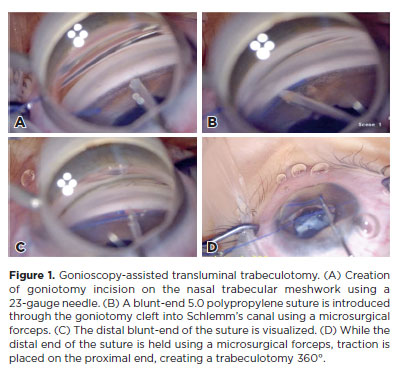
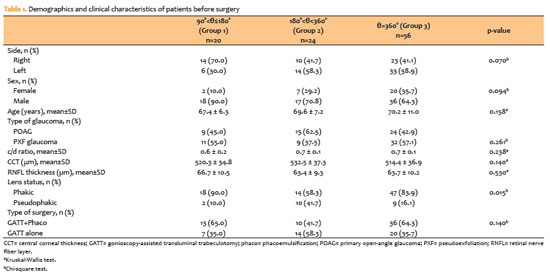
PURPOSE: To report the surgical outcomes of patients with primary congenital glaucoma who underwent gonioscopy-assisted transluminal trabeculotomy.
METHODS: This retrospective, noncomparative, interventional study included consecutive patients with primary congenital glaucoma with uncontrolled intraocular pressure undergoing gonioscopy-assisted transluminal trabeculotomy between January 2017 and January 2020. The included participants were followed up for at least 24 months, and only one surgeon performed all the procedures. The number of glaucoma medications, pre- and postoperative intraocular pressure, treatment extension (in quadrants), surgical complications, and any associated events or interventions were documented.
RESULTS: This study included 13 eyes from 10 patients (mean age, 4.5 ± 3.2 years; range, 3 months to 10 years). After a 24-month follow-up, the mean intraocular pressure significantly decreased from 26.1 ± 3.7 to 11.8 ± 2.5 mmHg (p<0.001). The mean number of glaucoma medications was reduced from 3.3 ± 0.5 to 0.85 ± 1.0 (p<0.001). At the end of the follow-up interval, all eyes (13 out of 13) had an intraocular pressure between 7 and 15 mmHg. In 11 of 13 eyes (84.6%), gonioscopy-assisted transluminal trabeculotomy was performed in all quadrants (360º). The most frequent postoperative complication was transitory (self-limited) hyphema (7 out of 13 eyes [53.8%]). No sight-threatening adverse events occurred during the entire follow-up period.
CONCLUSIONS: The 2-year follow-up results indicated gonioscopy-assisted transluminal trabeculotomy as an efficient and safe option for primary congenital glaucoma treatment with minimal postoperative complications.
Keywords: Glaucoma, Open-angle/surgery; Gonioscopy; Trabeculectomy/methods; Intraocular pressure; Antihypertensive agents/therapeutic use.
Abstract
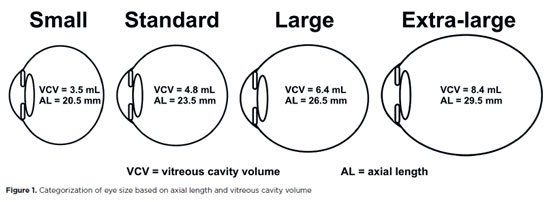
PURPOSE: Standard intravitreal medication dosages are based on an assumed vitreous cavity volume of 4.0-4.5 mL. However, individual variations in vitreous cavity volume may influence both the efficacy and safety of these medications. This study proposes dosage adjustments for intravitreal medications and gases according to axial length and the corresponding vitreous cavity volume.
METHODS: This descriptive study employed reference guidelines that use axial length to estimate the Axial Length-based Volume of the Vitrectomized Space and the Vitreous Volume EXact table for determining dose adjustments across varying eye sizes. Small eyes (axial length 19-22 mm) have an average vitreous cavity volume of 3.5 mL at an axial length of 20.5 mm; standard-sized eyes (22-25 mm) have 4.8 mL at 23.5 mm; large eyes (25-28 mm) have 6.4 mL at 26.5 mm; and extra-large eyes (28-32 mm) have 8.4 mL at 29.5 mm. The medications considered included anti-infectives, anti-VEGFs, complement inhibitors, recombinant proteases, chemotherapy agents, corticosteroids, and medical gases.
RESULTS: Analysis of intravitreal drug concentrations relative to vitreous cavity volume demonstrated notable variability when a standard dose was administered. Small eyes received about 135% of the concentration intended for a standard-sized eye; large eyes received around 75%; and extra-large eyes received under 60%. The recommended dose adjustments are as follows: for small eyes, administer 70-80% of the standard dose; for large eyes, 130-140%; and for extra-large eyes, 170-180%.
CONCLUSIONS: Tailoring intravitreal drug and gas dosages according to axial length and vitreous cavity volume may enhance intraocular drug distribution, potentially improving both safety and therapeutic outcomes.
Keywords: Intravitreal injections; Axial length; Vitreous body; Drug dosage calculations; Pharmacokinetics; Anti-infective agents
Abstract
Objetivo: O objetivo deste estudo é investigar os efeitos dos antidepressivos tricíclicos, dos inibidores da recaptação da serotonina e dos inibidores da recaptação da serotonina e noradrenalina na superfície ocular.
Métodos: Foram incluídos no estudo 330 olhos de 165 pacientes em uso de antidepressivos e 202 olhos de 101 controles. Foi medido o tempo de ruptura do fluido lacrimal e foram administrados o teste de Schirmer I e o questionário Ocular Surface Disease Index (OSDI). Os Inventários de Depressão e de Ansiedade de Beck foram aplicados ao uso dos medicamentos e foram registrados as dosagens, a duração da doença psiquiátrica e o tempo de remissão.
Resultados: No grupo de estudo, o tempo médio de ruptura do fluido lacrimal foi de 14,29 ± 4,81 segundos (intervalo de 4-26 segundos) e o valor médio do teste de Schirmer I foi de 16,05 ± 5,89 mm (intervalo de 2-28 mm). No grupo controle. o tempo médio de rompimento do fluido lacrimal foi de 18,16 ± 2,12 segundos (intervalo de 15-24 segundos) e o valor do teste de Schirmer I foi de 16,64 ± 2,31 mm (intervalo de 15-24 mm), com p<0,001 e p=0,005, respectivamente. No grupo de estudo, 38,18% (n=63) dos pacientes tinham olho seco, enquanto no grupo controle 17% (n=18) tinham olho seco (p<0,001). O escore médio no OSDI foi de 82,56 ± 16,21 (intervalo 66-100) no grupo dos antidepressivos tricíclicos, 60,02 ± 29,18 (10-100) no grupo dos inibidores da recaptação da serotonina e 22,30 ± 20,87 (0-75) no grupo dos inibidores da recaptação da serotonina e noradrenalina (p<0,001). O tempo médio de rompimento do fluido lacrimal foi de 14,36 ± 3,35 segundos (intervalo de 10-20 segundos) no grupo dos antidepressivos tricíclicos, 13,94 ± 5,81 segundos (intervalo de 4-26 segundos) no grupo dos inibidores da recaptação de serotonina e 14,93 ± 4,20 segundos (intervalo de 6-20 segundos) no grupo dos inibidores da recaptação de serotonina e noradrenalina (p=0,730). O valor médio do teste de Schirmer I foi de 9,90 ± 7,22 mm (intervalo de 2-30 mm) no grupo dos antidepressivos tricíclicos, 15,55 ± 5,15 mm (intervalo de 2-25 mm) no grupo dos inibidores da recaptação da serotonina e 17,71 ± 4,21 mm (intervalo de 10-30 mm) no grupo dos inibidores da recaptação da serotonina e noradrenalina (p<0,001). Não houve diferença estatisticamente significativa no escore OSDI, no tempo de ruptura do fluido lacrimal e nos valores do teste de Schirmer I entre os subgrupos de pacientes em uso de inibidores da recaptação de serotonina e de inibidores da recaptação de serotonina e noradrenalina.
Conclusões: Olho seco é uma queixa comum em usuários de antidepressivos, mas no que diz respeito à superfície ocular, inibidores da recaptação de serotonina e noradrenalina podem ser mais confiáveis que outros antidepressivos. Pacientes em uso de inibidores da recaptação de serotonina e noradrenalina têm escores menores no questionário OSDI. Os inibidores da recaptação da serotonina e noradrenalina, úteis nas síndromes de dor crônica, também podem ter um efeito corretivo nos sintomas de olho seco.
Keywords: Inibidores de recaptação de serotonina; Antidepressivos tricíclicos; Serotonina; Depressão; Dor crônica; Síndromes do olho seco; Norepinefrina; Inquéritos e questionários; Ansiedade; Preparações farmacêuticas.

Abstract
Objetivo: Investigar a susceptibilidade a antibióticos, o perfil clínico, epidemiológico e microbiológico das ceratites infecciosas.
Métodos: Estudo retrospectivo longitudinal. Registros médicos e laboratoriais de 2015 a 2019 foram revisados retrospectivamente.
Resultados: Trezentos e oitenta patógenos (321 bactérias e 59 fungos) foram isolados das córneas de 352 pacientes. As espécies de Staphylococcus foram os microorganismos mais isolados (45%), seguidos de Pseudomonas (18,4%), fungos (15,5%), Streptococcus (7,9%) e Serratia (3,2%). Não houve resistência das bactérias Gram-positivas à amicacina ou vancomicina, enquanto 14,8% isolados Gram-positivos foram resistentes à ciprofloxacina (p<0,05). Todos os organismos Gram-negativos eram suscetíveis à amicacina. Pacientes do sexo masculino representaram 62,8% de 129 casos com dados clínicos acessíveis. A média de idade foi 53,17 ± 21 anos. O tempo até a apresentação (desde o início dos sintomas) foi de 14,9 ± 19,4 dias (mediana: 7 dias). Úlceras grandes (>5mm em qualquer extensão) representaram 49,6% (64 olhos) dos casos. A duração do tratamento foi de 49 ± 45,9 dias (mediana: 38 dias). Trauma ocular direto foi relatado por 48 (37,2%) pacientes e uso de lentes de contato por 15 (11,6%) pacientes. Foi prescrito tratamento prévio para 72 (55.8%) pacientes. Outras classes de medicamentos foram prescritas para 16 (12.4%). Setenta e nove (61,2%) pacientes tiveram que ser hospitalizados. Como complicações maiores, 53 (41,1%) pacientes apresentaram perfuração corneana, 40 pacientes (31%) foram submetidos à ceratoplastia penetrante tectônica e 28 (21,7%) desenvolveram glaucoma secundário. Oito pacientes (6,2%) evoluíram para endoftalmite. O tratamento empírico da ceratite microbiana foi amplamente empregado, com 94 (72,9%) pacientes em uso de moxifloxacina e 56 (43,4%) em uso de ciprofloxacina antes do resultado da cultura.
Conclusões: Nosso hospital tratou predominantemente de pacientes com úlceras microbianas graves. Embora bactérias Gram-positivas constituíssem a maioria dos isolados, bacilos e fungos Gram-negativos também foram frequentemente identificados nas ceratites microbianas. Os resultados de suscetibilidade sugerem a combinação de vancomicina e amicacina como um regime terapêutico empírico eficaz para essa condição grave com risco de perda visual permanente.
Keywords: Ceratite; Infecções oculares bacterianas; Antibacterianos.
Abstract
PURPOSE: Endophthalmitis is one of the most important adverse events after cataract surgery, as it can lead to total vision loss. This study aimed to describe the occurrence of endophthalmitis after phacoemulsification with intraocular lens implantation in patients treated in a community setting in Porto Velho, Rondônia, Brazil.
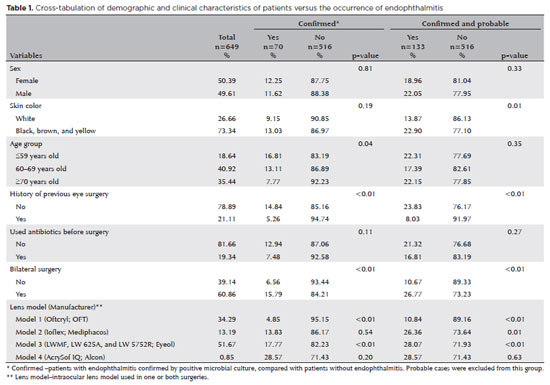
METHODS: This retrospective cohort study was conducted using a database of 649 medical records of patients who underwent surgery and were followed for three months. Poisson regression analysis was used to estimate relative risks and 95% confidence intervals (95% CIs).
RESULTS: The incidence of confirmed endophthalmitis was 11.94% (95% CI, 9.50-14.76), while the incidence of confirmed and probable cases was 20.50% (95% CI, 17.52-23.73). For confirmed cases, bilateral surgery and the use of lens model 3 were identified as risk factors for endophthalmitis, whereas age over 70 yr and preoperative antibiotic use were protective factors. For confirmed and probable cases, brown and yellow skin color, bilateral surgery, and the use of lens model 3 were also identified as risk factors. Gram-negative bacteria were the predominant etiological agents, and corneal edema was the main clinical manifestation. The mean duration of treatment was eight days, and 27.12% of patients used antibiotics.
CONCLUSION: The incidence observed was substantially higher than that reported in the literature, with a predominance of Gram-negative agents and an association with bilateral surgeries and the Eyeol intraocular lens model. These findings reinforce the need for continuous epidemiological surveillance and the implementation of specific biosafety and infection control protocols during cataract surgery campaigns.
Keywords: Endophthalmitis; Disease outbreaks; Phacoemulsification; Lens implantation, intraocular; Lenses, intraocular; Cataract; Risk factors; Anti-bacterial agents
Abstract
PURPOSE: This study aimed to report the surgical outcomes and success predictors of micropulse transscleral cyclophotocoagulation in eyes with refractory glaucoma.
METHODS: This was a noncomparative, interventional case series. Patients with refractory glaucomas, defined as eyes with prior incisional glaucoma surgery failure and uncontrolled intraocular pressure, who underwent micropulse transscleral cyclophotocoagulation between March 2017 and June 2021 were enrolled. A minimum follow-up period of 6 months was required. Preoperative and postoperative intraocular pressure, number of hypotensive medications, surgical complications, and any subsequent related events were recorded. Success criteria were as follows: 1) intraocular pressure reduction ≥20% and intraocular pressure ≤18 mmHg; 2) intraocular pressure reduction ≥30% and intraocular pressure ≤15 mmHg. The need for topical hypotensive medications was not considered a failure.
RESULTS: Seventy-nine (79) eyes (79 patients; mean age, 57.5 ± 20.6 years) were included. Overall, the median follow-up duration was 12.0 (interquartile interval, 6–24) months, and the mean intraocular pressure was reduced from 22.8 ± 6.8 mmHg to 15.5 ± 5.6 mmHg at the last follow-up visit (p<0.001). The mean number of medications was reduced from 2.8 ± 0.7 to 2.0 ± 1.0 (p<0.01). At 12 months postoperatively, the success rates for criteria 1 and 2 were 54.9% and 49.7%, respectively. Aside from one case of corneal ulcer, which fully resolved with clinical treatment, and two cases of persistent hypotony (with no visual acuity loss during follow-up), no other vision-threatening complications were observed during the postoperative period. The magnitude of intraocular pressure reduction at 1 month (adjusted to preoperative intraocular pressure; HR=1.01; p=0.002).
CONCLUSION: Our findings suggest that micropulse transscleral cyclophotocoagulation is a relatively effective alternative for managing refractory glaucomas, with minor postoperative complications. In addition, the initial intraocular pressure reduction was a statistically significant predictor of 1-year success in patients undergoing micropulse transscleral cyclophotocoagulation.
Keywords: Intraocular pressure/physiology; Glaucoma, open-angle/surgery; Trabeculectomy; Laser coagulation/methods; Tonometry, ocular/methods; Postoperative complications; Antihypertensive agents/therapeutic use.
Abstract
The advantages and disadvantages of using perioperative subconjunctival steroid injections in dropless cataract surgery continue to be debated. A systematic review of PubMed, EMBASE, and the Cochrane Central database identified five studies—two randomized controlled trials and three non-randomized studies—encompassing 70,751 eyes. Among these, 12,319 eyes (17.4%) received subconjunctival steroid injections, while 58,432 eyes (82.6%) were managed with topical steroids. The Cochrane Collaboration’s RoB 2 tool was applied for bias assessments in randomized controlled trials, and heterogeneity was assessed using the I² statistics. No statistically significant differences were found between the two groups regarding macular edema (p=0.249), visual acuity (p=0.73), or laser flare count (p=0.45). Both subconjunctival injections and topical steroids demonstrated comparable efficacy and safety in controlling postoperative inflammation after cataract surgery. Additional research is warranted to validate these conclusions.
Keywords: Cataract extraction; Phacoemulsification; Lens implantation, intraocular; Postoperative care; Intravitreal injections; Anti-inflammatory agents, non-steroidal/administration & dosage; Glucocorticoids; Triamcinolone acetonide; Research design; Randomiz
Abstract
Objetivos: Descrever as características demográficas e clínicas das vítimas de trauma ocular por fogos de artifício atendidas nas emergências oftalmológicas de dois centros de referência em Pernambuco e identificar fatores relacionados a mau prognóstico visual.
Métodos: Avaliação retrospectiva dos prontuários de pacientes admitidos na emergência oftalmológica com história de trauma por fogos de artifício entre janeiro de 2012 e dezembro de 2018. A coleta de dados incluiu idade, gênero, procedência, mês e ano do acidente, estruturas oculares acometidas e características das lesões, além do tipo de tratamento a que os pacientes foram submetidos. Naqueles pacientes acompanhados por mais de 30 dias, analisou-se a acuidade visual final e a associação com sua procedência.
Resultados: Foram incluídos 370 olhos de 314 pacientes. Destes, 248 (79,0%) vítimas eram do sexo masculino e 160 (51,0%) da região metropolitana do Recife, com uma média de idade de 25.6 ± 18.8 anos. Em 56 (17,8%) dos casos o trauma foi bilateral. No mês de junho ocorreu um total de 152 (48,4%) casos. Os sítios mais acometidos foram pálpebras em 91 (24,6%) olhos e superfície ocular em 252 (68,1%). O tratamento cirúrgico foi necessário em 87 (23,5%) olhos. Após manejo clínico-cirúrgico, 37 (10.0%) olhos desenvolveram visão pior do que 20/400. Destes, 34 (91,9%) olhos eram de pacientes do interior do estado de Pernambuco ou de outro estado. Os pacientes provenientes do interior do estado apresentaram maior chance de desenvolver cegueira quando comparados aos que eram provenientes da região metropolitana (Odds Ratio de 5,46).
Conclusões: As vítimas de trauma ocular por fogos de artificio foram em sua maioria do sexo masculino, procedentes da região metropolitana do estado e das faixas etárias pediátrica e economicamente ativa. Aqueles provenientes do interior ou de outros estados apresentaram maior chance de desenvolver cegueira.
Keywords: Emergências; Queimaduras oculares/epidemiologia; Incêndios;Traumatismos por explosões; Substâncias explosivas
Abstract
OBJETIVO: Examinar os efeitos do tratamento de reticulação unilateral do colágeno corneano na acuidade visual e os achados topográficos em olhos não tratados de pacientes com ceratocone progressivo bilateral.
MÉTODOS: Foram rastreados retrospectivamente pacientes com ceratocone progressivo submetidos a tratamento de reticulação. Foram incluídos no estudo 188 olhos não tratados de 188 pacientes tratado unilateralmente com reticulação padrão ou acelerada e que recusaram o procedimento de reticulação no outro olho. A acuidade visual e os achados topográficos dos olhos não tratados foram obtidos no pré- e pós-operatório no 1o, 3o, 6o, 12o, 24o, 30o e 36o mês.
RESULTADOS: As alterações ao longo do tempo foram semelhantes para as variáveis examinadas nos olhos não tratados de pacientes tratados com métodos de reticulação padrão e acelerado (p>0,05). No 12º mês, 136 olhos não tratados (95,8%) estavam estáveis, de acordo com os critérios de progressão. Apenas quatro olhos (8%) mostraram progressão no 24o mês. Nenhuma progressão foi observada nos 16 pacientes que tiveram um acompanhamento de 36 meses.
CONCLUSÕES: O estudo mostrou que os olhos não tratados de pacientes com ceratocone progressivo bilateral não apresentaram taxas de progressão significativas após o tratamento unilateral com reticulação.
Keywords: Topografia da córnea; Reagentes de ligações cruzadas; Ceratocone; Fármacos fotossensibilizantes; Colágeno/uso terapêutico; Fotoquimioterapia/métodos; Acuidade visual
Abstract
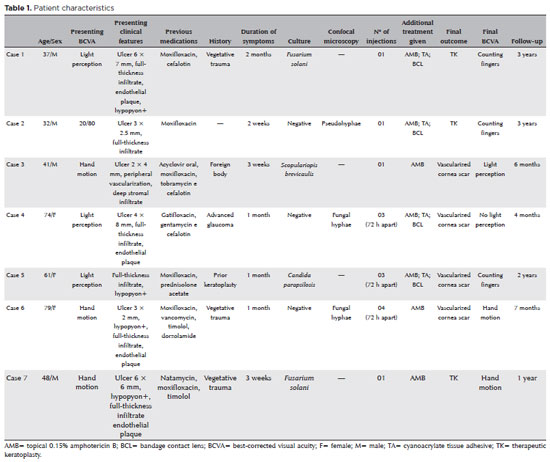
PURPOSE: This study aimed to report the use, efficacy, and safety of intracameral voriconazole as an adjuvant treatment for deep fungal keratitis.
METHODS: This was a prospective case series of seven eyes with fungal keratitis with anterior chamber involvement or a corneal ulcer refractory to conventional topical treatment. In addition to topical treatment with 0.15% amphotericin B eye drops, voriconazole 50 μg/ 0.1 mL
was administered to the anterior chamber of each affected eye up to four times within 72 h. The primary outcome measures were healing (fungal eradication) and the need for therapeutic keratoplasty. Best-corrected visual acuity was a secondary outcome measure.
RESULTS: Three cases were confirmed by confocal microscopy, and four were diagnosed from positive culture tests. At presentation, one patient had a best-corrected visual acuity of 20/80, while all others had hand motion or worse. Four cases received one intracameral injection, two cases received three, and one case received four injections. There were no complications after any of the intracameral voriconazole injections. Four patients had imminent corneal perforations and were treated with cyanoacrylate adhesive and bandage contact lenses. Four patients recovered from the infection, and three underwent therapeutic keratoplasty. The final best-corrected visual acuity was improved in two cases but all patients had a final visual acuity of counting fingers or worse.
CONCLUSION: As an adjuvant treatment for deep fungal keratitis, intracameral voriconazole injection is a feasible option. Although fungal eradication was achieved in all patients, three required therapeutic keratoplasty and all patients had unsatisfactory visual acuity outcomes.
Keywords: Antifungal agents; Fungi; Corneal transplantation; Keratitis; Eye infections, fungal; Voriconazole
Abstract
A angeíte congelada é tipo específico de vasculite retiniana rara e grave. Pode ser idiopática ou secundária à doença sistêmica. Relatamos um incomum caso com associação ao lúpus eritematoso sistêmico, sendo a angeíte congelada uma das manifestações do quadro. Uma jovem de 13 anos, previamente hígida, apresentou queixa de baixa visual importante bilateral. À fundoscopia foi evidenciado o aspecto de angeíte de vasos congelados em ambos os olhos. Extensa investigação etiológica foi realizada com diagnóstico confirmado de lúpus eritematoso sistêmico. Poucos casos foram descritos na literatura.
Keywords: Lupus eritematoso sistêmico/complicações; Vasculite retiniana/etiologia; Vasculite retiniana/tratamento farmacológico; Imunossupressores/uso terapêutico; Relato de casos
Abstract
O grau de participação da infecção viral e da reação imunológica do hospedeiro às partículas virais no processo infamatório das diferentes formas de ceratites herpéticas ainda é objeto de controvérsia. Esse fato gera conflitos de classificação e planejamento terapêutico relativos a essas morbidades. Esta revisão visa estimular a reflexão sobre a adequabilidade das classificações, nomenclaturas e abordagens terapêuticas dessas entidades.
Keywords: Ceratite herpética/complicações; Herpes simples/microbiologia; Antibacterianos/uso terapêutico
Abstract
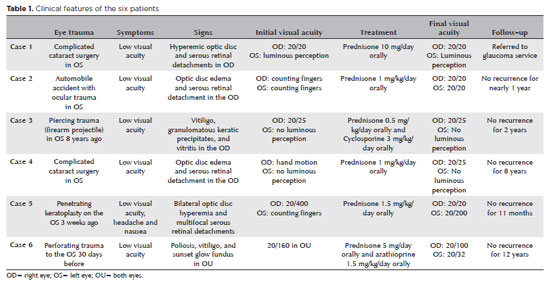
A oftalmia simpática consiste em uma panuveíte granulomatosa bilateral rara e potencialmente devastadora, ocorrendo geralmente após trauma ocular cirúrgico ou não cirúrgico. O diagnóstico é baseado em aspectos clínicos e apoiado por exames de imagem, como ultrassonografia ocular e tomografia de coerência óptica. O tratamento consiste em terapia imunossupressora com esteróides e, eventualmente, drogas poupadoras de esteróides, como ciclosporina, azatioprina, ciclofosfamida e micofonato de mofetila. O manejo rápido e eficaz com agentes imunossupressores sistêmicos permite o controle da doença e a obtenção de boa acuidade visual no olho simpatizante. A enucleação, por outro lado, poderia ser considerada apenas em situações em que o olho lesado não tem percepção luminosa ou há trauma grave. Além de uma revisão bibliográfica sobre o tema, foi relatada uma série de 6 casos com diferentes modalidades de tratamento imunossupressor e cirúrgico.
Keywords: Oftalmia simpática; Autoimunidade, Terapia de imunossupressão; Imunossupressores/uso terapêutico; Enucleação ocular; Evisceração do olho; Humanos; Relato de casos
Abstract
Endophthalmitis is a severe form of purulent inflammation caused by the infection of the intraocular tissues or fluids. This infection infrequently occurs through endogenous routes, which are often correlated with major risk factors. Escherichia coli, a gram-negative rod, can cause endophthalmitis through hematogenous spread. We here report a 59-year-old man who presented to our service with acute visual impairment in his left eye, preceded by floaters. He was taking sirolimus and azathioprine for a transplanted kidney, had undergone catheterization for bladder atresia, and had a history of recurrent E. coli urinary tract infections. On evaluation, the left eye exhibited visual acuity of hand motion, anterior chamber reaction (3+/4+), and intense vitritis (4+/4+) with white flake clusters, which prevented appropriate retinal evaluation. Pars plana vitrectomy was performed, and the culture yielded E. coli. The present case highlights the importance of identifying the signs and symptoms of infection early so that diagnosis and treatment of endophthalmitis can be promptly initiated.
Keywords: Endophthalmitis; Escherichia coli; Escherichia coli infections; Eye infections, Bacterial; Sepsis; Vitrectomy; Anti-bacterial agents/therapeutic use; Humans; Case reports
ABO is licensed under a Creative Commons Attribution-NonComercial 4.0 Internacional.

About
Issues
Editorial Board
Submission
Official publication of Conselho Brasileiro de Oftalmologia
Rua Casa do Ator, 1.117 - 2º andar - CEP: 04546-004
São Paulo - SP, Brazil
Phone: +55 11 3266-4000